What Is a Funded Trading Account & How Does It Work?
 FundingPipsBy FundingPips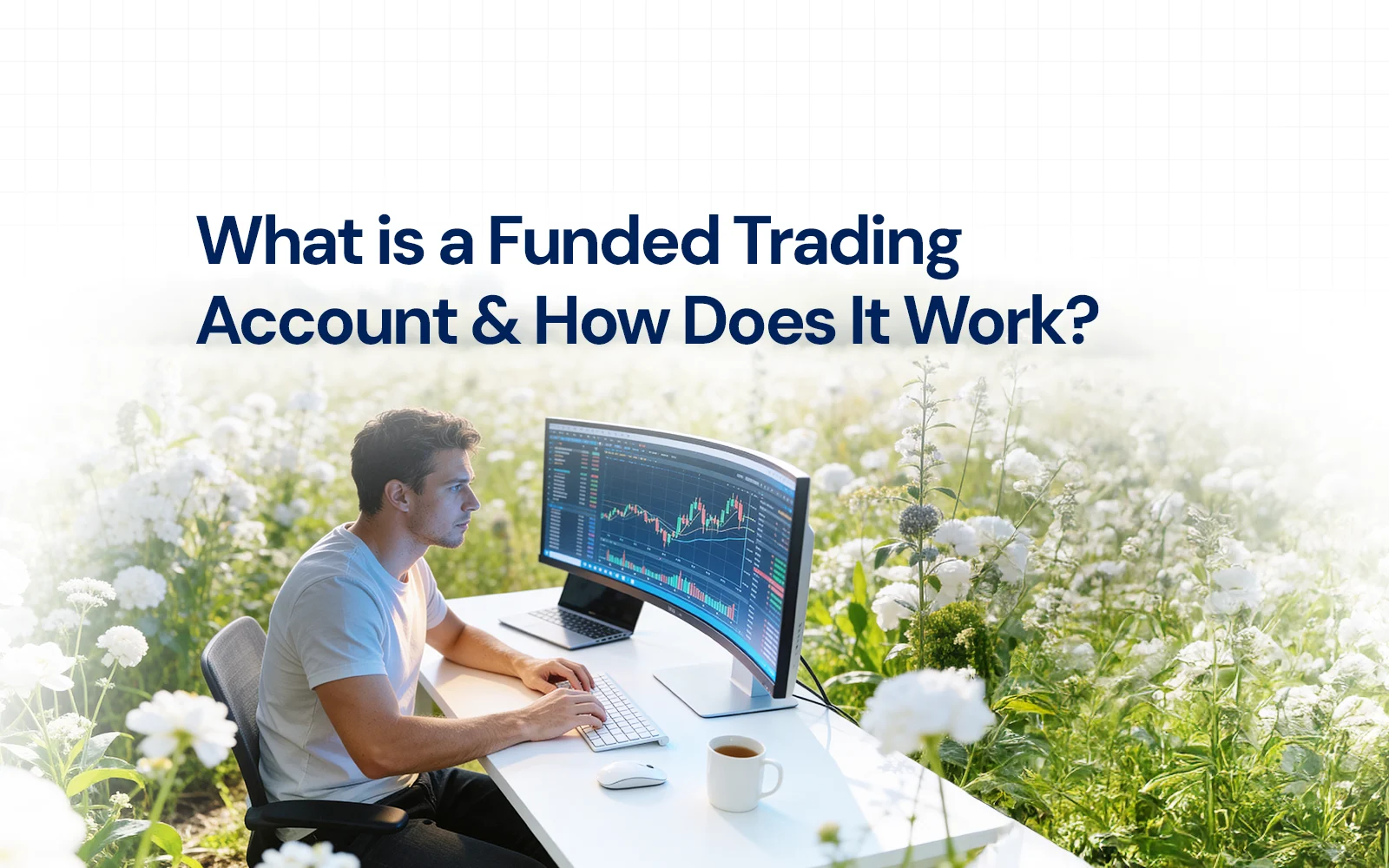
A funded trading account is a trading account provided by a prop firm that allows traders to trade financial markets using the firm's capital instead of risking large amounts of personal money, while earning a share of the profits generated.
A proprietary trading firm commonly called a prop firm is a financial company that deploys its own capital into the markets through skilled traders. Unlike traditional brokerages, prop firms do not execute client orders. Instead, they identify trading talent, provide structured capital access, and earn returns by sharing in the profits those traders generate.
This model has transformed modern retail trading, as traders no longer need to personally deposit large sums to access larger trading opportunities.
How Does a Funded Trading Account Work?
At first glance, funded trading sounds almost unbelievable. How can traders access six-figure trading accounts without personally depositing six figures themselves?
The answer lies in the evaluation process. Most prop firms first assess a trader’s discipline, consistency, and risk management before granting access to a funded or master account.
The process typically works like this:
Step 1: Pass an Evaluation or Access Instant Funding
Depending on the prop firm, traders may choose between:
Instant/Zero models
1-Step evaluations
2-Step evaluations
Each structure offers a different balance between speed, flexibility, and evaluation depth. For example, FundingPips offers four different trader-centric pathways:
Zero Model
1-Step Model
2-Step Standard Model
2-Step Pro Model
FundingPips’ Zero Model allows traders to access a funded account without undergoing traditional evaluations. Traders can retain reward splits of up to 95%; copy trading is allowed; there are no reward caps; and a swap-free add-on is available.
And honestly, that significantly changes the psychology of trading, allowing traders to focus on execution immediately rather than worrying about “passing first.”
Step 2: Receive Access to a Funded/Master Account
Once the evaluation is successfully completed, traders gain access to a funded account and can begin trading under the firm’s risk management framework.
Funded accounts can range from:
$5,000
$10,000
$50,000
$100,000
$200,000 or more
This gives traders access to substantially larger trading capital than many could comfortably risk personally.
Step 3: Start Trading & Generating Rewards
Once funded, traders begin generating rewards based on their trading performance. The trader keeps a percentage of the profits while the firm retains the remainder according to the agreed split structure.
Imagine managing a six-figure trading account without personally funding the entire balance! That possibility is exactly why funded trading has exploded globally over the last few years.
What Can You Trade With a Funded Account?
Funded trading accounts typically provide access to multiple financial markets, including:
Forex
Indices
Commodities
Futures
Cryptocurrencies
The exact instruments available depend on the prop firm and account type. However, funded trading is not simply about placing trades randomly.
Professional funded traders spend significant time:
analyzing markets,
studying macroeconomic conditions,
managing risk exposure,
and maintaining emotional discipline under pressure.
Because ultimately, funded trading is less about gambling and more about professional capital management.
Why Funded Trading Accounts Have Exploded in Popularity
Funded trading has grown rapidly because it solves one of the biggest problems retail traders face: Limited trading capital.
Many traders possess strong strategies but cannot scale effectively because their personal accounts are too small. Funded trading accounts change that equation completely.
Access to Larger Capital
Instead of slowly compounding a tiny personal account for years, traders can access larger capital much earlier in their journey.
Reduced Personal Financial Risk
Funded traders operate under structured risk limits using firm capital rather than exposing large amounts of personal savings to market volatility.
And psychologically, that creates a very different trading experience.
Faster Scalability
A trader managing a funded account can scale much faster than someone relying solely on personal capital growth.
For many traders, funded accounts mark the moment trading begins to feel professionally scalable rather than financially limiting.
Funded Trading Account vs Personal Trading Account: Key Differences
Feature | Funded Account | Personal Account capital |
Capital Source | Prop firm capital | Personal money |
Risk Exposure | Limited personal risk | Full personal risk |
Profit Structure | Shared rewards | Keep all profits |
Scalability | Faster growth potential | Slower scaling |
Rules | Structured risk guidelines | Self-managed |
Both account types have advantages, but funded accounts have become increasingly attractive because they allow traders to scale opportunities without requiring enormous personal deposits.
Funded Account Rules: What Every Trader Must Follow
Understanding how funded accounts differ from personal accounts is only half the picture. The other half is understanding the operating framework those funded accounts run within. Because unlike personal accounts where a trader sets their own risk parameters, funded accounts operate under firm-defined rules and respecting those rules is what separates traders who sustain funded accounts long-term from those who lose access quickly.
Funded trading is professional capital management under structured risk controls. Most prop firms enforce rules such as:
Daily drawdown limits
Maximum overall drawdown
Risk management requirements
Trading restrictions
These rules exist to protect both the firm’s capital and the trader’s long-term sustainability.
However, the structure of these rules varies dramatically between firms.
FundingPips has become increasingly popular, partly because its evaluations focus heavily on transparent, hard limits rather than subjective restrictions. For example, FundingPips 1-Step Model has:
No consistency rules
No time limits to pass
Balance-based drawdown
News trading allowed on the On-Demand plan
One particularly unique feature is the balance-based drawdown structure. Unlike many firms where withdrawals reduce available drawdown, FundingPips traders can withdraw profits while still maintaining meaningful risk buffer flexibility.
Types of Funded Trading Accounts Explained
These are the common types of funded trading accounts:
Instant/Zero Accounts
Instant accounts allow traders to access master accounts immediately without completing evaluations first. FundingPips’ Zero Model is designed specifically for traders who want immediate access to funded trading while retaining high flexibility.
1-Step Funded Accounts
1-Step models simplify evaluations into a single phase before funding. FundingPips’ 1-Step evaluation removes consistency rules and time limits entirely, allowing traders to focus more naturally on execution.
2-Step Funded Accounts
2-Step models remain the most traditional funded structure. FundingPips’ 2-Step Standard model includes:
No maximum time limits
Overnight & weekend holding allowed
No consistency rules
News trading during evaluations
Flexible reward cycles with reward splits up to 100%
Meanwhile, the FundingPips 2-Step Pro Model introduces one of the fastest progression structures in the industry:
Only 6% profit targets per phase
Ability to pass in just 2 trading days
Weekly rewards up to 80%
Swap-free add-on available
No consistency rules
And honestly, that flexibility reflects how much modern funded trading is evolving beyond rigid traditional systems.
How Do Funded Traders Get Paid?
Funded traders receive a percentage of the profits they generate based on the prop firm’s reward structure. FundingPips, for instance, offers four highly flexible reward cycles:
Weekly
Bi-Weekly
On-Demand
Monthly
This flexibility gives traders significantly more control over cash flow management, rather than forcing everyone into a single rigid payout schedule.
FundingPips has also surpassed $250 million in trader rewards, with many reward requests reportedly processed within minutes and sometimes seconds once approved.
And in prop trading, payout confidence changes everything. Because traders do not simply want opportunities. They want confidence that successful performance will be consistently rewarded.
Common Mistakes Traders Make With Funded Accounts
Many traders lose their funded accounts not because their strategy fails, but because their discipline breaks down under pressure. Some common mistakes include:
Overleveraging emotionally
Revenge trading after losses
Ignoring drawdown limits
Overtrading low-quality setups
Chasing profit targets aggressively
The root cause behind most of these mistakes is the same: traders begin treating the funded account like personal money. Once that psychological shift happens, emotional decision-making replaces process-driven execution. A drawdown that would be handled calmly under normal conditions suddenly triggers panic, revenge trading, or aggressive position sizing — all of which accelerate account termination rather than prevent it.
Are Funded Trading Accounts Worth It?
Yes, funded trading accounts are worth considering as they provide:
Access to larger capital
Reduced personal financial exposure
Faster scalability
Professional trading structure
Of course, funded trading still requires discipline, emotional control, and strong risk management. But for traders capable of managing those responsibilities, funded accounts can create opportunities that would otherwise take years to build independently.
Should You Get a Funded Trading Account?
A funded trading account is far more than just access to capital. It represents trust.
The prop firm trusts the trader to manage capital responsibly, while the trader trusts the firm to provide transparent conditions and reliable rewards. And perhaps that is why funded trading continues growing so rapidly in 2026.
Because when discipline, opportunity, and scalability come together properly, trading begins feeling less like isolated speculation and more like professional capital management with real long-term potential.